
5 fish species in the Caspian Sea are on the edge of extinction
*By polluting Okhchuchay transboundary river with different industrial wastes, heavy metals and salt compounds, Armenia not only destroys the fauna, flora and ecosystem of the South Caucasus region, but also directly affects the depletion of biological resources of the Caspian Sea. The latest monitoring conducted by the specialists of the Ministry of Ecology and Natural Resources of the Republic of Azerbaijan in the Caspian Sea proves this once again.
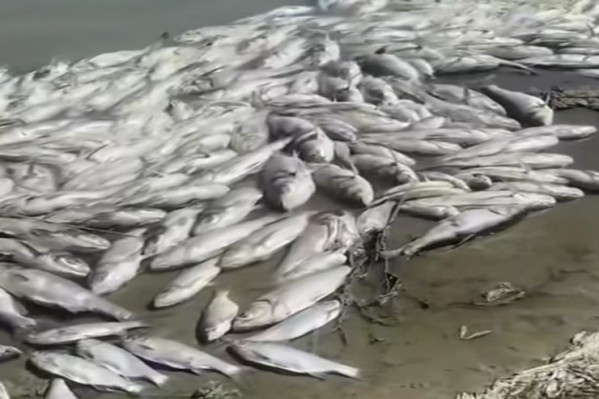
Thus, the results of the latest monitoring conducted by the Centre for the study of biological resources of the Service for the protection of biological diversity of MENR in September this year, in order to study biological resources of the Caspian Sea and marine environment, were sad. Thus, it was observed that, in comparison with previous years, the number of 5 fish species, namely, Eurasian carp, Caspian kutum, Caspian roach, Eastern bream and Alburnus decreased many times. According to the experts, if environmental terror committed by Armenia against Azerbaijan continues, it is not unlikely that these fish species shall soon die out in the Caspian Sea. The matter is that above mentioned fish species are mainly freshwater fish and live in the rivers flowing through the territory of Azerbaijan, spawn and continue their further life in the Caspian Sea. These fish enter the Caspian Sea mainly through Kura river, which is the largest river in the South Caucasus. Aras river, the largest tributary of Kura river, is a river transboundary with Armenia. Another transboundary river, 83 km long Okhchuchay river originates from Gapijig mountain (3285 m) of Zangazur range. Major part of the river is located in Sunik region of Armenia (historical region of Azerbaijan called Zangazur). Its lower bed flows through the territory of Zangilan region liberated from Armenian occupation into Aras river.
Being transboundary river, Okhchuchay is a river that is constantly exposed to severe pollution on the territory of Armenia. We can even say that it plays the role of industrial wastes collector in Armenia. Thus, throwing of heavy metals directly into Okhchuchay by Gajaran copper and molybdenum plant and Gafan ore processing plant, located in the southern region of neighbouring country, that exceed standard limits by several times without any cleaning, not only destroys the fauna and flora of Kura-Aras river basin, but also negatively affects the fauna of the Caspian Sea. That is why, Azerbaijan beats the alarm related to the preventing the pollution of Okhchuchay by Armenia.
Thus, starting from 1993 it was impossible to conduct the monitoring on Okhchuchay river, because the river was located on the territory of Zangilan region, Azerbaijan, occupied by Armenia. It became possible for the specialists of the Ministry of Ecology and Natural Resources (MENR) to conduct the monitoring in the river only after 27 years (in 2020), when the territories of Azerbaijan had been liberated from the occupation of Armenian military units during Patriotic War. This monitoring revealed terrible facts. High content of heavy metals, especially copper, molybdenum, manganese, iron, zinc and chromium, were found in the water samples taken from Okhchuchay in January-June 2021. Pursuant to the monitoring reports of MENR, the content of the copper-molybdenum compound in the river was two, of iron – four and nickel – seven times higher than standard limits. The colour of the river periodically changed due to the pollution. Massive mortality of Small Trout was observed in the river in March 2021. During visual monitoring conducted in the part of the river passing through Shayifli and Jahangirbayli villages of Zangilan, mass mortality of tens of thousands of Small Trout and Barbus included in “Red Book” of the Republic of Azerbaijan were observed. In order to attract the attention of international community to the matter related to ecological disaster in the river, Azerbaijan had to appeal to the authoritative laboratories of foreign countries. The analysis of the water and bottom deposits samples from the river was conducted at the request of MENR by internationally accredited and certified SGS laboratory (Germany). The test results of the water samples revealed high content of heavy metals, especially iron, copper, manganese, molybdenum, zinc, chromium, nickel, etc. in the waters of the river surface. It even revealed that the content of hazardous substances in the deposit samples exceeded standard limits several times, and the river pollution level was found to be critical. In other words, the death of fish was caused by the excess of iron, copper, nickel, molybdenum and other heavy metals in the river water.
In this regard, the Ministry of Ecology and Natural Resources addressed a letter to all the international organizations in order to inform about ecological crisis and critical situation in Okhchuchay, including expected environmental risks for the river and its ecosystem in terms of its continuous pollution by Armenia, and in order to prevent the pollution. A year has passed, but there are still no concrete results.
In other words, if environmental terror committed nowadays by Armenia against Azerbaijan, international organizations continue to turn a blind eye to the problem, we shall witness the depletion in the near future of many fish species not only in these rivers, but also in the Caspian Sea.
BAKÜ / By SALİM BALAYEV