
Azerbaijan Is One of the Countries Suffering the Gravest Consequences of the Mine Threat
Ecological terrorism refers to deliberate damage inflicted by a state or an individual on another country’s flora and fauna through the destruction of its natural resources. According to the Rio Declaration on Environment and Development, warfare should not have a destructive impact on the process of sustainable development. States must therefore respect international law protecting the environment during armed conflicts. Armenia, however, not only failed to observe these principles, but also grossly violated them by devastating the natural environment in the Azerbaijani territories it occupied. In other words, it carried out both ecological terrorism and mine terrorism against Azerbaijan.
The scale of the ecological crimes committed by Armenia in the Azerbaijani territories it held under occupation for nearly 30 years is immense. Approximately six years ago, during the 44-day Patriotic War, Azerbaijan liberated its territories from occupation. Monitoring conducted in the liberated areas revealed that Armenia had also displayed a hostile attitude towards nature throughout the many years in which it held those territories under occupation. The ecological terrorism perpetrated by Armenia created serious threats to the region’s ecosystem. Biodiversity, species of flora and fauna, and specially protected natural areas suffered extensive damage; territories were burned, water resources were polluted, and forests rich in valuable tree species were destroyed. Overall, the deliberate plundering of surface and subsurface natural resources disrupted the ecological balance in the region and caused irreparable damage to Azerbaijan’s environment. In doing so, Armenia violated the international conventions on ecology and the environment to which it is a party, including the United Nations Convention on the Prohibition of Military or Any Other Hostile Use of Environmental Modification Techniques.
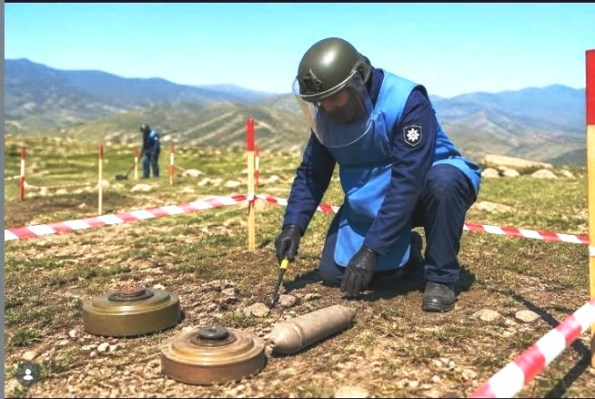
Beyond all this, Azerbaijan is today one of the countries in the world most severely affected by mine terrorism. Mine explosions endanger human life and call into question the fundamental right to life, while also causing extensive environmental damage. Plastic waste generated by explosions has harmful ecological consequences and adversely affects soil structure. Mines that remain buried in the ground for long periods trigger harmful chemical reactions. Booby-trapped mines also cause the death of wild animals.
According to estimates, Armenia planted more than 1.5 million mines on Azerbaijani territory during its 30-year policy of occupation. In other words, 12 per cent of the country’s territory is contaminated by mines and unexploded ordnance. This represents 28 per cent of the country’s arable land.
It is evident that mine terrorism formed an integral part of Armenia’s war crimes. Although six years have passed since the end of the war, the number of mine casualties continues to rise. Among the main reasons are Armenia’s refusal to provide accurate maps of the mines it planted on Azerbaijani territory and its placement of booby-trapped mines on roads, in cemeteries and near other civilian facilities located behind the former line of contact.
According to official figures, since the war ended in 2020, 421 Azerbaijani citizens, most of them civilians, have become mine casualties. Of these, 72 were killed and 349 were seriously injured. Overall, since the beginning of Armenia’s military aggression against Azerbaijan, more than 3,500 Azerbaijanis have been affected by mines, including 358 children and 38 women.
The difficulties Azerbaijan faces in the demining process hinder reconstruction and restoration work and seriously obstruct the return of nearly one million former internally displaced persons to their homes.
The mine terrorism carried out by Armenia in Azerbaijani territories not only creates irreversible environmental problems, but also strikes at the biodiversity of Azerbaijan, the wider region and, from a global perspective, the planet as a whole. The consequences of the damage inflicted on nature by these acts of terror may be profound and long-lasting. International observation and assessment groups have therefore been invited to Azerbaijan to assess this brutal form of environmental destruction and calculate the resulting damage.
While continuing its efforts to secure an assessment of acts of ecological terrorism, Azerbaijan is also pursuing measures to restore the ecological balance in the territories liberated from occupation.
Following the Patriotic War, Azerbaijan has been carrying out large-scale restoration and reconstruction of the liberated territories at its own expense. At the same time, it is compelled to allocate substantial financial resources to resolving the mine problem.
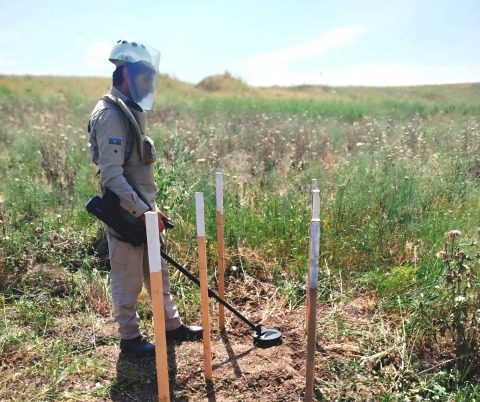
Today, demining operations in Azerbaijan are conducted using the most modern and advanced technologies available worldwide. The reality, however, is that demining is a lengthy process. In a region with terrain as difficult as Nagorno-Karabakh, this process may take several decades. Nevertheless, thanks to the dedicated work of deminers, more than 261,000 hectares have already been cleared of mines.
Women deminers have also made a significant contribution to this work. Women’s demining teams comprising a total of 20 members were established in 2023. To date, they have cleared more than 600 hectares and detected a total of 550 mines and items of unexploded ordnance.
Accurate maps are essential to accelerate the clearance of the territories liberated from occupation. Despite the efforts of international organisations, however, Armenia continues, under various pretexts, to avoid handing over the mine maps to the authorities in Baku.
Armenia’s refusal to provide Azerbaijan with accurate mine maps results in continuing violations of the rights to life, property and health, among other rights enshrined in international human rights treaties to which Armenia is also a party.
The facts outlined above should prompt serious concern within the international community. Influential international organisations should demand that Armenia end its policy of ecological and mine terrorism against Azerbaijan and finally provide the Azerbaijani side with accurate maps of the mines planted in the territories it held under occupation.
They should also urge Armenia, which describes itself as a “democratic country”, to take concrete steps towards signing a comprehensive peace agreement with Azerbaijan.
Salim Balayev
Chairman of Public Unionof Ecological Enlightenment „Ecolog-2010”
Baku, Azerbaijan


